

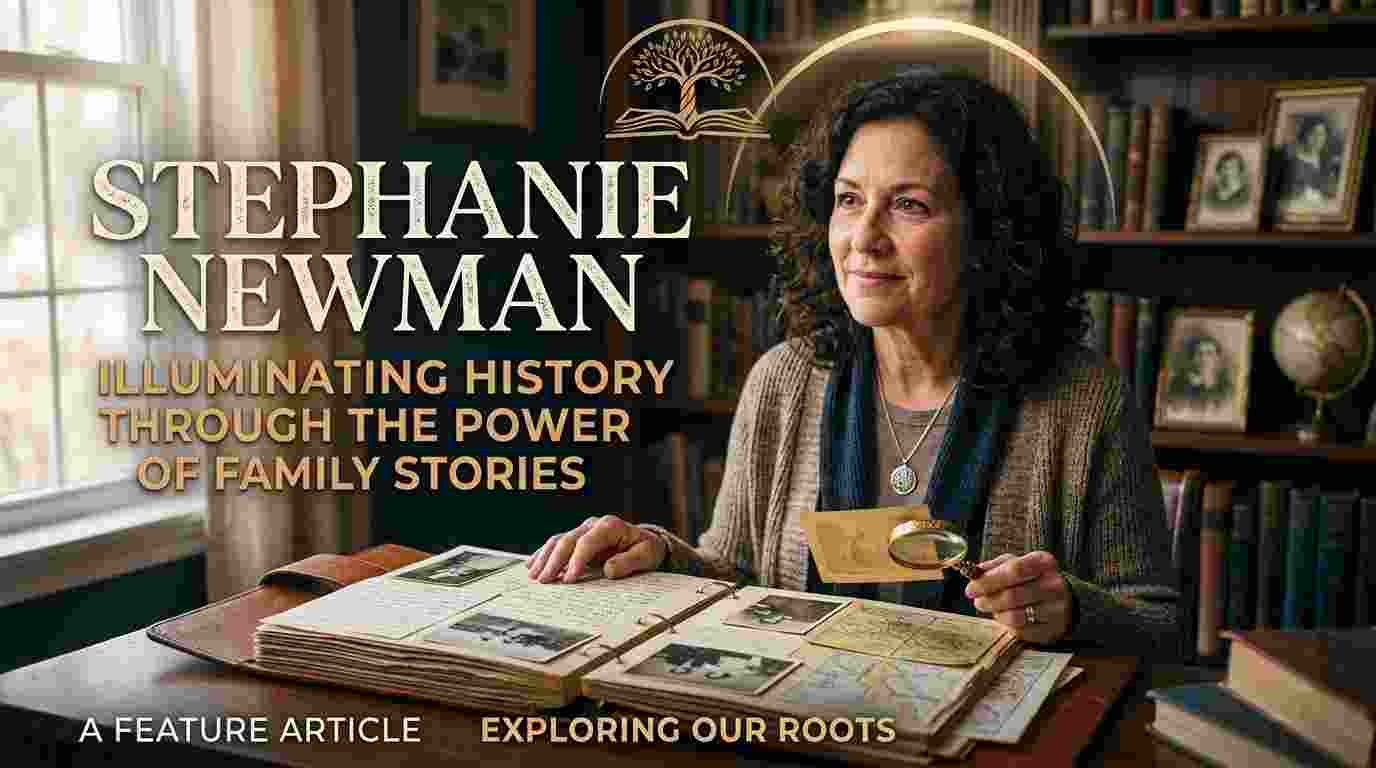
Some writers choose their subjects; for others, the subjects choose them. For Stephanie Newman, the call came from a place of profound personal history—her grandmother’s survival story from the Holocaust and the painful sacrifice of leaving a child behind in war-torn Hungary. This deeply rooted connection has shaped Newman into a distinctive voice in contemporary literature, one who navigates the delicate terrain between historical documentation and deeply felt family narrative. Her work stands as a testament to how personal memory can illuminate broader historical truths, offering readers an intimate entry point into the complexities of 20th-century Central Europe.
The Unlikely Journey from Harvard to Budapest
The path that led Stephanie Newman to become a scholar of Hungarian Jewish literature was anything but conventional. With a Bachelor of Arts in English from Harvard University and a Master of Fine Arts in fiction from New York University, she possessed the foundational tools of a writer, but it was the stories whispered across generations that truly directed her focus. Newman discovered that her grandmother’s experiences were not merely family lore but represented a thread connecting to a vast tapestry of Central European culture that had been nearly erased by the horrors of war.
This realization transformed her academic pursuits into something far more personal and urgent. Rather than remaining in the comfortable confines of American literary circles, Stephanie Newman felt an undeniable pull toward Budapest, the city where her grandmother’s story began. What makes Newman’s approach distinctive is her refusal to treat history as something distant and academic. Instead, she immerses herself in the places, languages, and cultural remnants that her grandmother would have known, bringing a palpable immediacy to her work that resonates deeply with readers.
The Fulbright Year That Changed Everything
When Stephanie Newman received the 2023-24 Fulbright Hungary Scholar award, it represented far more than professional recognition. This opportunity allowed her to walk the streets her grandmother once walked, to read the literature that shaped Hungarian Jewish intellectual life, and to connect with scholars who shared her passion for preserving this endangered cultural heritage. The limited-edition print project she created, titled “Mapping Jewish Hungarian Literature,” emerged directly from this immersive experience.
During this transformative year, Newman conducted extensive research in archives that had preserved fragments of a world that was nearly destroyed. She discovered that mapping was not merely a physical exercise but an intellectual and emotional one—charting the geography of a culture that had been systematically targeted for elimination. Stephanie Newman approached this work with the sensitivity of a granddaughter and the rigor of a trained scholar, creating something that transcended traditional academic boundaries.
Breathing Life into Forgotten Voices
The most compelling aspect of Stephanie Newman’s work is her ability to give voice to those who have been silenced by history. Through her fellowship with the Memorial Foundation for Jewish Culture and her residency at MacDowell, Newman has dedicated herself to ensuring that Hungarian Jewish voices continue to be heard in the English-speaking world. This is not simply translation work or historical documentation; it is an act of cultural resurrection.
What makes Newman’s approach particularly effective is her understanding that stories need context to truly come alive. She doesn’t simply present historical facts; she creates environments where readers can experience the emotional reality of what was lost. This is why her writing has appeared in prestigious publications ranging from Bookforum to Literary Hub, venues where nuanced cultural commentary is valued and where her work reaches audiences hungry for deeper understanding.
Crafting a Narrative from Grandmother’s Sacrifice
The novel that Stephanie Newman is currently revising represents the culmination of her journey as a writer. Inspired by her grandmother’s life as a Hungarian Holocaust survivor who made the heart-wrenching decision to leave behind her firstborn son after the war, this manuscript explores themes of sacrifice, memory, and the impossible choices that war forces upon ordinary people. During her 2024 MacDowell Fellowship, Newman worked in the Irving Fine studio, distilling years of research and emotional preparation into prose that she hopes will honor her grandmother’s legacy.
This project demonstrates how Stephanie Newman transforms deeply personal material into universal art. The specific details of her grandmother’s story—the Hungarian landscape, the Jewish community that once thrived in Budapest, the trauma of separation—become vehicles for exploring questions that resonate across cultures and generations. What does it mean to survive when others have not? How do we carry the weight of those we were forced to leave behind? These are the questions that drive Newman’s work.
Beyond the Novel: A Broader Intellectual Vision
While her novel represents a significant creative achievement, Stephanie Newman’s contributions extend far beyond this single project. Her interviews with prominent scholars, including her conversation with Dr. Andrea Pető of Central European University published in the Los Angeles Review of Books, demonstrate her commitment to fostering intellectual dialogue. Her feminist blog, Writing on Glass, provides a platform for examining contemporary issues through a thoughtful, critical lens.
This breadth of engagement reveals something essential about Newman’s approach to writing and scholarship. She understands that stories exist in conversation with each other, and that understanding one aspect of history or culture requires connecting it to others. This intellectual generosity—the willingness to engage with ideas across disciplinary and cultural boundaries—makes Stephanie Newman not just a writer but a vital cultural participant.
Building Bridges Between Cultures and Generations
Perhaps most significantly, Stephanie Newman functions as a bridge builder. She connects English-speaking readers to Hungarian Jewish literature that might otherwise remain inaccessible. She connects her grandmother’s generation to contemporary readers who may have limited understanding of what was lost in the Holocaust. She connects academic scholarship to deeply emotional, accessible storytelling.
This bridging work is increasingly important in a world where cultural memory is constantly threatened by the passage of time and the relentless forward march of current events. By preserving and interpreting Central European culture for new audiences, Stephanie Newman performs the essential work of cultural conservation. Her dedication ensures that the literature, history, and stories of Hungarian Jewish life continue to have meaning and relevance.
Frequently Asked Questions
What motivates Stephanie Newman’s writing about Hungarian Jewish history?
Stephanie Newman is deeply motivated by her grandmother’s experience as a Holocaust survivor from Hungary. This personal connection drives her to preserve and share the stories and culture that were nearly destroyed.
Where has Stephanie Newman conducted her research?
As a Fulbright Hungary Scholar, she conducted extensive research in Budapest, exploring archives and cultural institutions while immersing herself in Hungarian Jewish literature and history.
What recognition has Stephanie Newman received for her work?
She has been awarded a Fulbright Hungary Scholarship, a MacDowell Fellowship in Literature, and a fellowship from the Memorial Foundation for Jewish Culture.
What is Stephanie Newman’s current writing project?
She is currently revising her debut novel, inspired by her grandmother’s life as a Hungarian Holocaust survivor who left behind her firstborn son after the war.
Where can readers find Stephanie Newman’s published work?
Her writing appears in Bookforum, Literary Hub, Hyperallergic, and the Harvard Review, among other publications. She also publishes feminist writing on her blog, Writing on Glass.
Conclusion
The work of Stephanie Newman reminds us that history is not merely a collection of dates and events but a living tapestry of human experience. Through her scholarship, her creative writing, and her intellectual engagement with Central European culture, Newman ensures that the voices of Hungarian Jewish writers and survivors continue to be heard. Her journey from Harvard to Budapest, from academic scholar to novelist, represents a commitment to storytelling that is both deeply personal and universally significant. As she continues to craft narratives from the heart of Central Europe, Stephanie Newman offers readers a gift of profound value—the opportunity to connect with stories that might otherwise be lost to time, and to remember that even in the darkest chapters of history, the human spirit endures through the stories we tell.